

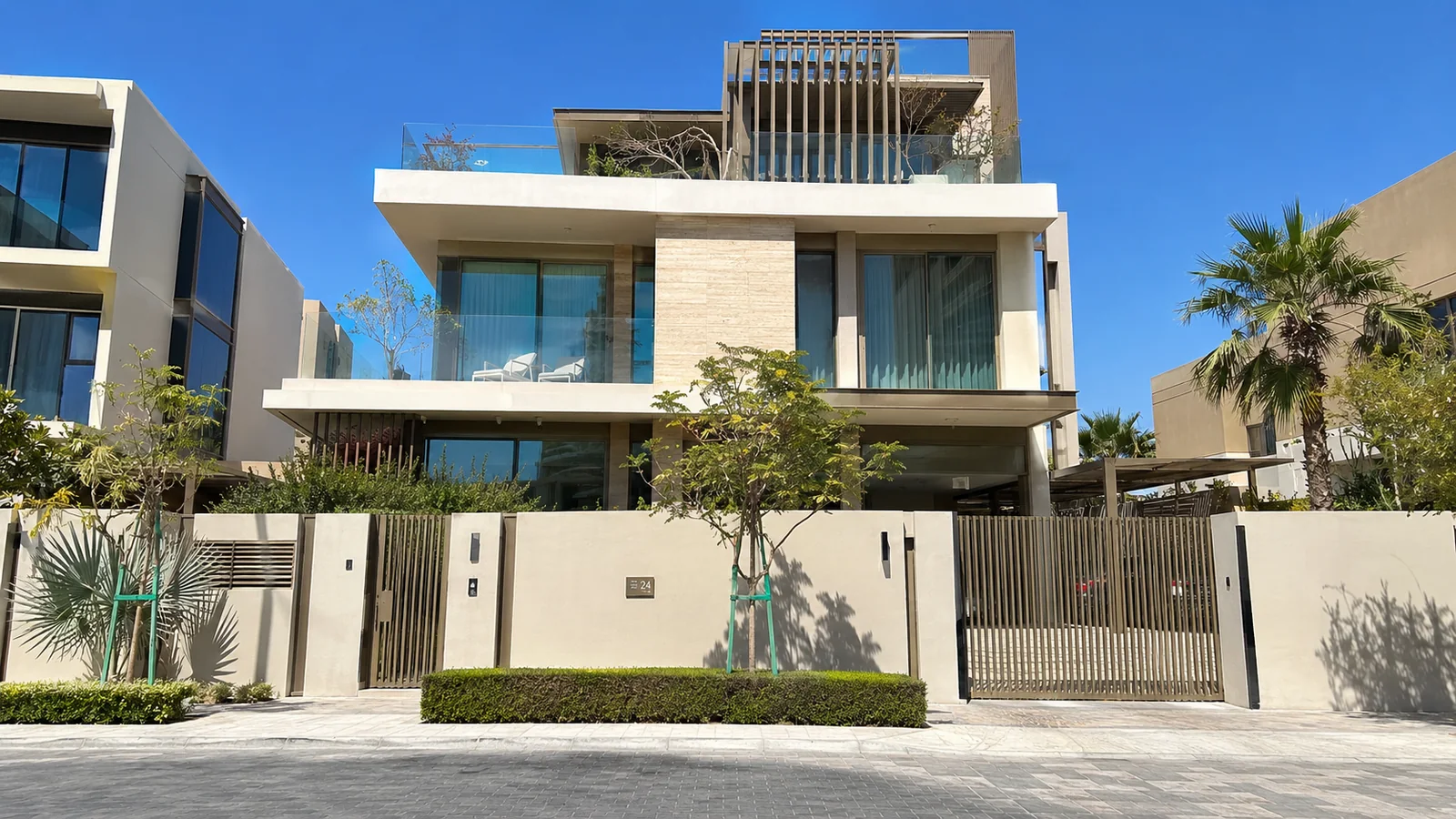
For a Dubai villa or high-end residential interior, sourcing materials from China can create strong value. Custom cabinets, wooden doors, wall panels, stone-look finishes, metal details and selected furniture can be produced with high flexibility and coordinated in one supply chain.
The risk is that a beautiful rendering does not automatically become a buildable procurement plan. Dubai projects need clear drawings, approved samples, stable QC, shipping protection and early checks on local requirements.
This checklist explains what to prepare before sourcing, which material categories are usually suitable, and how to reduce the gap between design intent and delivered materials.
Quick answer
The best time to plan China sourcing for a Dubai villa is before finalizing materials. Align the design drawings, BOQ, samples, compliance checks and QC standards first; then compare price.
01 / Before Sourcing
Prepare drawings and decisions before asking for a quotation
A useful quotation needs more than room photos and a style reference. The factory must understand size, finish, quantity, hardware level, packaging method and delivery destination. Without this information, quotations may look competitive but remain impossible to execute accurately.
- Floor plans, elevations and room-by-room scope.
- Cabinet drawings, door schedule, wall panel areas and finish direction.
- A BOQ or at least an estimated quantity list.
- Target quality level, budget range and expected completion date.
02 / Suitable Categories
Prioritize custom items where factory coordination matters
China sourcing is most valuable when the project needs customization, coordinated finishes and repeated quality control. These categories usually benefit more from factory-side planning than from simple market buying.
- Custom kitchen, wardrobe, vanity and storage cabinets.
- Interior wooden doors, concealed doors and matching wall panels.
- Stone, sintered stone, wood veneer, laminate and metal finish systems.
- Selected furniture, lighting, handles, hardware and decorative metal details.
03 / Dubai-Specific Checks
Check climate, fire safety and product requirements early
Dubai interiors need to consider heat, sunlight, dust, air conditioning use and long-term material stability. For certain materials, fire safety, product certification, indoor air quality or green building requirements may also apply depending on the project type and authority review.
Before procurement starts, confirm requirements with the project consultant, contractor or local authority. Dubai Municipality provides information on product certification and the Al Sa'fat green building system; these references are useful starting points, but the final requirement should always be checked for the specific project.
- Dubai Municipality product certification
- Al Sa'fat Dubai Green Building System
- For fire-rated doors or regulated products, request the required certification path before production.
04 / Samples and QC
Use samples to lock design intent before mass production
For high-end residential interiors, a sample is not only a color reference. It is a decision record. It should confirm texture, gloss level, edge treatment, hardware feel, cleaning performance and how materials look under warm lighting.
- Approve finish samples before confirming full production.
- Use coded samples so later production can be checked against the same reference.
- Check dimensions, edges, hardware, surface defects and color consistency before shipment.
- Request photo or video reports for key production and packing stages.
05 / Packing and Delivery
Plan packaging as part of the material specification
Long-distance shipping can damage a good product if packaging is treated as an afterthought. For Dubai projects, the packing list should connect product codes, room locations, installation sequence and container loading order.
Good packaging also supports installation. When crates are labeled by room, elevation and product type, the site team spends less time searching, unpacking and matching parts.
FAQ
Common questions before sourcing from China
What materials are usually worth sourcing from China?
Custom cabinets, interior doors, wall panels, stone or sintered stone finishes, hardware, selected furniture and lighting are usually worth reviewing, especially when the project needs coordinated finishes and repeated quantities.
Should sourcing start before or after interior design is finished?
It should start before materials are fully locked. Early factory input can help confirm whether the design is practical, where costs may rise and which details need clearer specifications.
How can clients reduce the risk of receiving materials that do not match the design?
Use coded samples, detailed shop drawings, written QC standards, pre-shipment inspection photos and a packing list connected to room locations and installation sequence.
Conclusion
China sourcing for Dubai villas works best when it is not treated as a late-stage buying task. It should be built into design decisions, sample approval, compliance review, production QC and delivery planning.
At CizzWyatt, we connect design language with factory-side execution so every material decision can become a clearer procurement instruction.